
Home Citu Bridge

Enter the code you have found nearby to unlock this audio story (codes are lowercase and contain no spaces or special characters).
Sorry, that's the wrong code! Please carefully read the clue and try again. Remember, codes are lowercase and contain no spaces or special characters.
Congratulations! You’ve successfully unlocked the audio story. You can play it below. A full transcript is also available on this page, along with additional photos and information about this location.
Citu Bridge (2019)
Citu is a sustainable riverside housing project conceived as part of the Leeds Climate Innovation District. The Citu footbridge was included in the project design and consists of a striking yet simple concertina-style bridge made from weathered steel, a typically low-maintenance and sustainable material.
At 50 metres, Citu bridge has the longest single span of all the bridges in Leeds.
Phase 1 of the project would deliver 300 homes on the north bank of the river. These would be built to modern European designs, using sustainable materials such as timber rather than concrete and steel, and making use of cutting edge building techniques. The first residents moved into their new homes in early 2019.
Phase 2 of the project is well underway and there are plans to add more sustainable homes, repurposing the land immediately to the south of the bridge which was previously home to the Hydro Aluminium Motorcasts factory which made cast aluminium engine blocks for major car manufacturers. The facility closed in 2004 due to increased foreign competition.
The bridge now connects both halves of the Climate Innovation District which will eventually consist of over 500 properties.
Bonus Bridge! Richmond Bridge (2002)
Standing on the Citu Bridge looking downstream, we see a modern concrete and steel road bridge in the distance. Despite its rather plain appearance, it does have a story to tell, but we have to go back two centuries to find its origins.
In 1825 there were only a couple of river crossings in Leeds, and certainly none this far downstream. It was proving more difficult for people and goods to move around. There was an old ferry close to this point but it was clearly inadequate for a prosperous and growing town such as Leeds.
A short road was proposed that would connect Hunslet on the south of the river to a place called ‘Black Bank’ on the north side. There were already established roads on the north and south of the river, and connecting them together would be an easy win.
The road was privately built by the Hunslet and Leeds Turnpike Trust and was barely half a mile long. Today the road is better known as South Accommodation Road.
The name ‘Black Bank’ is now lost to history but refers to the junction with Cross Green Lane.
A cast iron suspension bridge was completed in 1828, engineered by George Leather & Son, architects of the first Monk Bridge and Crown Point Bridge.
The Bridge tolls ranged from ha’penny for a foot passenger all the way up to sixpence for a horse and carriage. Attempts to evade the toll would result in a fine of up to five pounds – the equivalent of over £400 in today’s money.
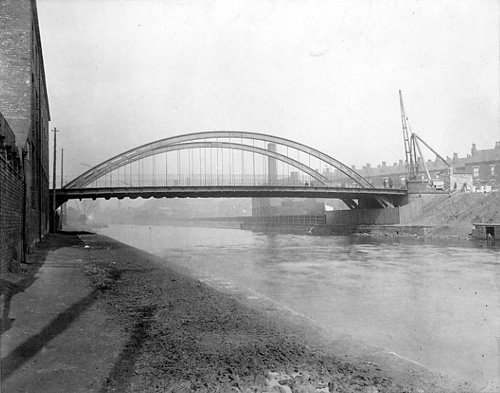
As with Monk Bridge on the other side of town, the original suspension bridge became unfit for purpose and was replaced in 1899 with a new lattice girder bridge designed by Thomas Hewson, the city engineer.

By the end of the 20th century, plans were underway to finally complete the Leeds Inner Ring Road, a long-running urban road project that had already transformed the city centre in the 1960s and 70s.
A new bridge was built in the early 2000s. It is today known as Richmond Bridge, after the nearby district of Richmond Hill. This new bridge was wide enough to accommodate a proposed viaduct which would swiftly take traffic from the east of the city across the river, connecting directly with the M621 motorway to the south east.
The 1899 bridge was removed, but the abutments can still be seen today, marked by a row of bollards on each side of the river.
In September 2008, the John Smeaton Viaduct, named after the Leeds-born civil engineering pioneer, was opened as part of Stage 7 of the Inner Ring Road.
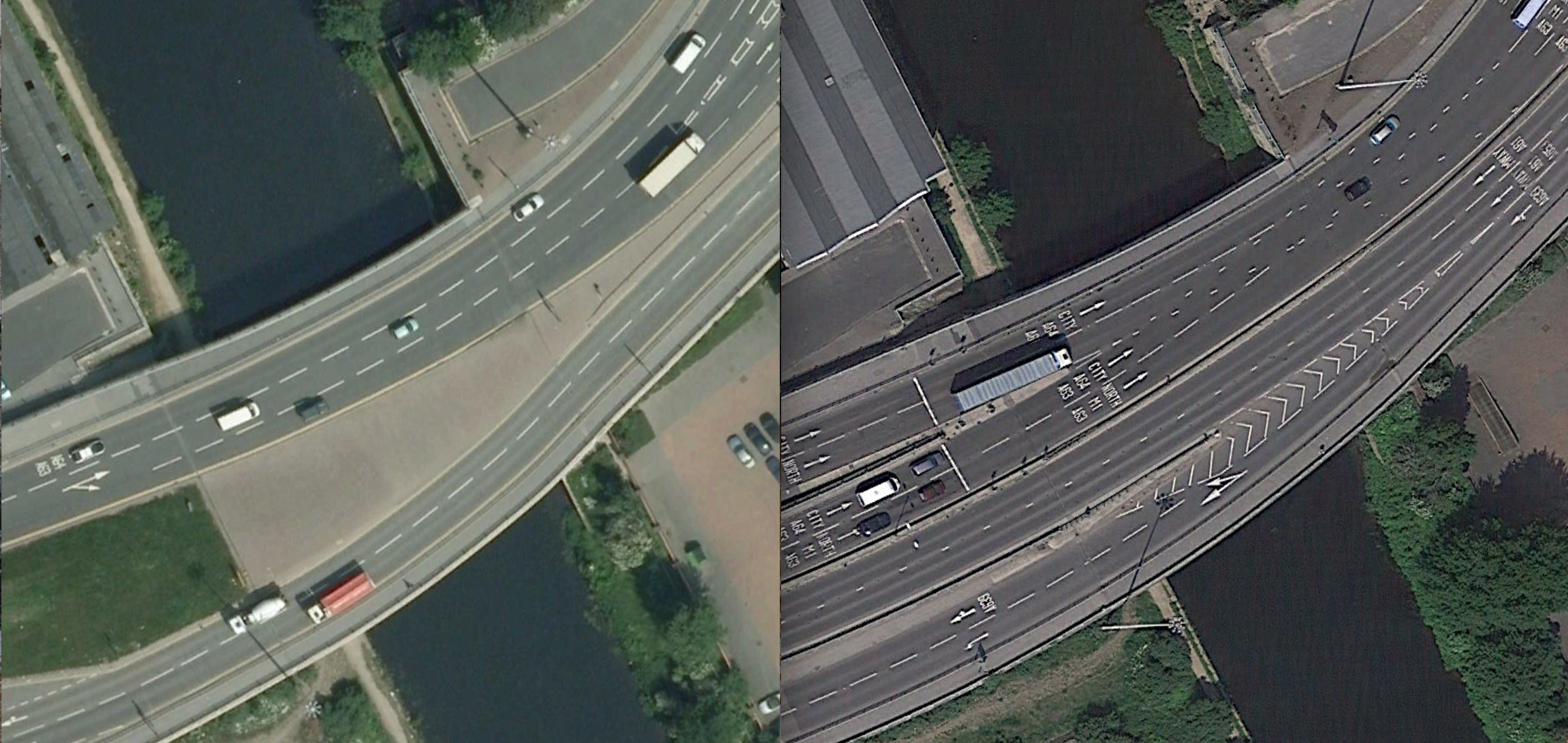
This was to be the final piece in the jigsaw – bringing to an end a famous urban road project which had started 44 years previously.
This site uses cookies to personalise content, provide social media features, and analyse traffic. Information about your use of this site is also shared with analytics partners. You can change your preferences at any time. For more information, please see our Privacy Policy.